
Suture
“Stich it like a pro”
What is suturing and why is it important?
Suturing is when a doctor stitches up a cut or wond so it can heal. They use a special needle and thread to gently bring the skin back together. Suturing helps the cut to heal faster, keep it away from germs, stops bleeding, and make the scar smaller.
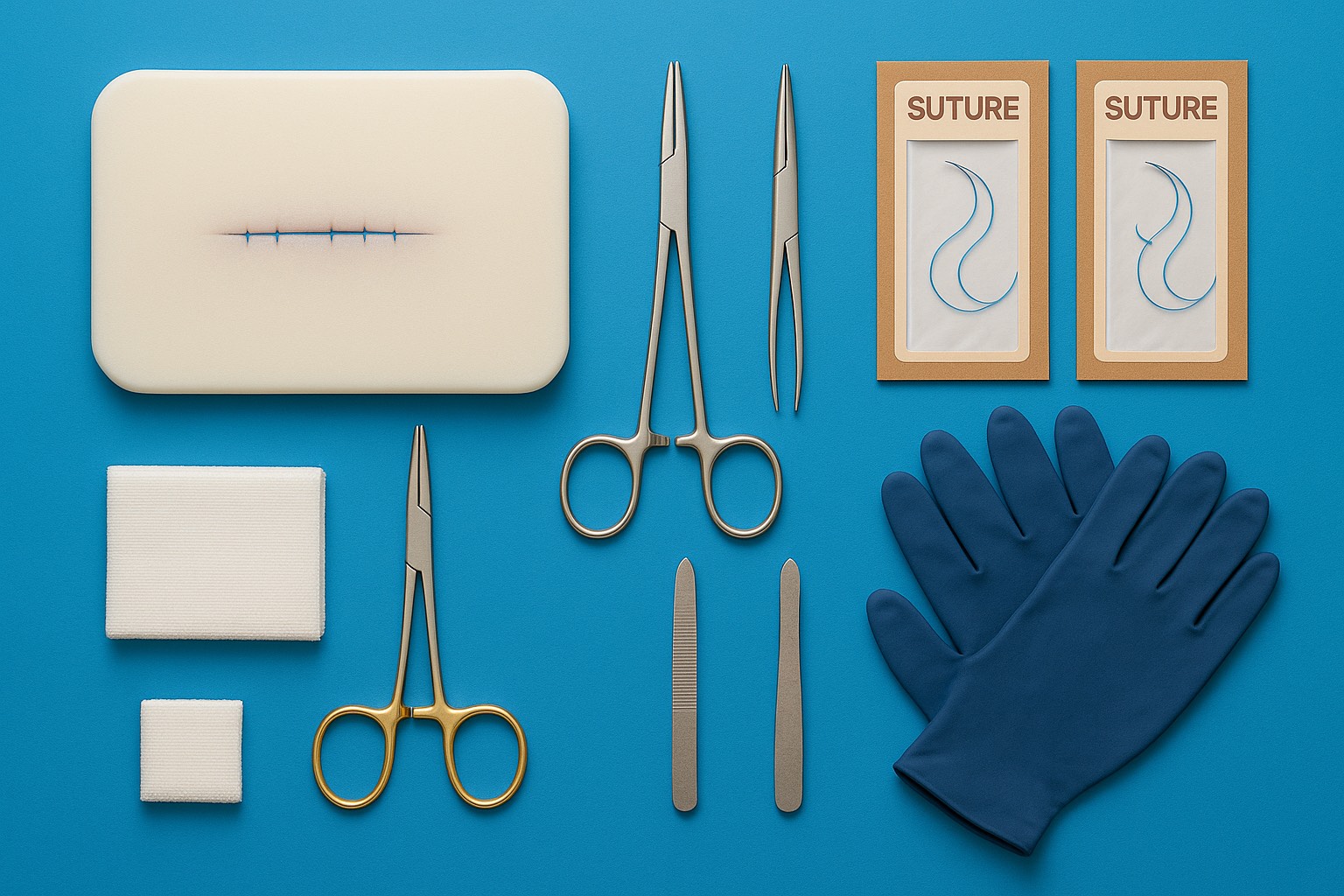
Types of Sutures
All sutures fall under 2 main catergories which are absorbable and non-absorbable sutures. Absorbable sutures are a special thread doctors use to close a cut or wound. It holds the skin together so it can heal, and it eventually absorbs inside the body so it doesn’t have to be taken out. Non- absorbable sutures are a special kind of thread doctors use to close a cut or help the skin heal after surgery. It’s made from a safe material that slowly disappears inside the body, so the doctor doesn’t need to take it out later.
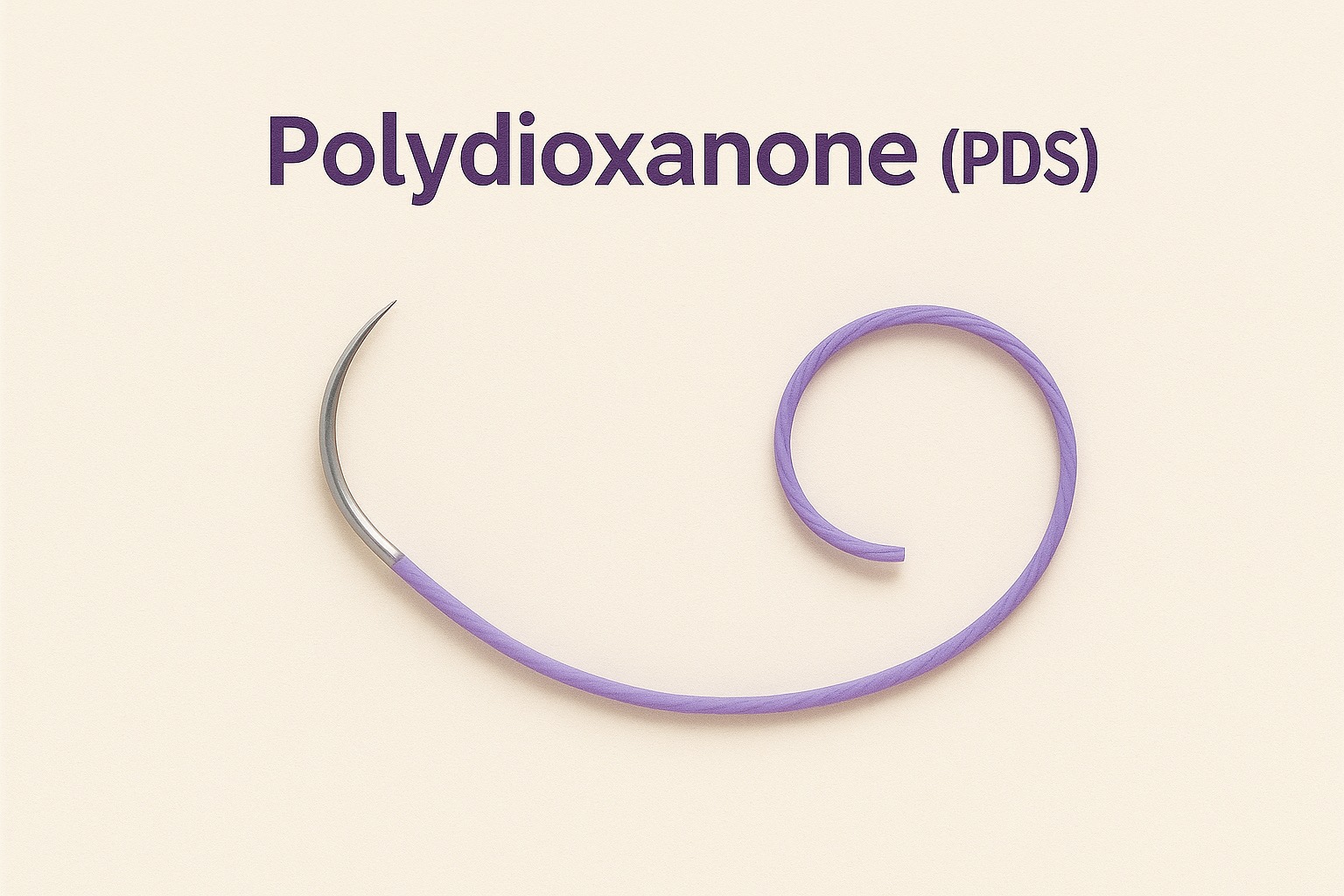
Polydioxanone (Absorbable)
A special thread used by doctors to stitch cuts or wounds. It keeps the skin together for healing and is absorbed by the body over time.
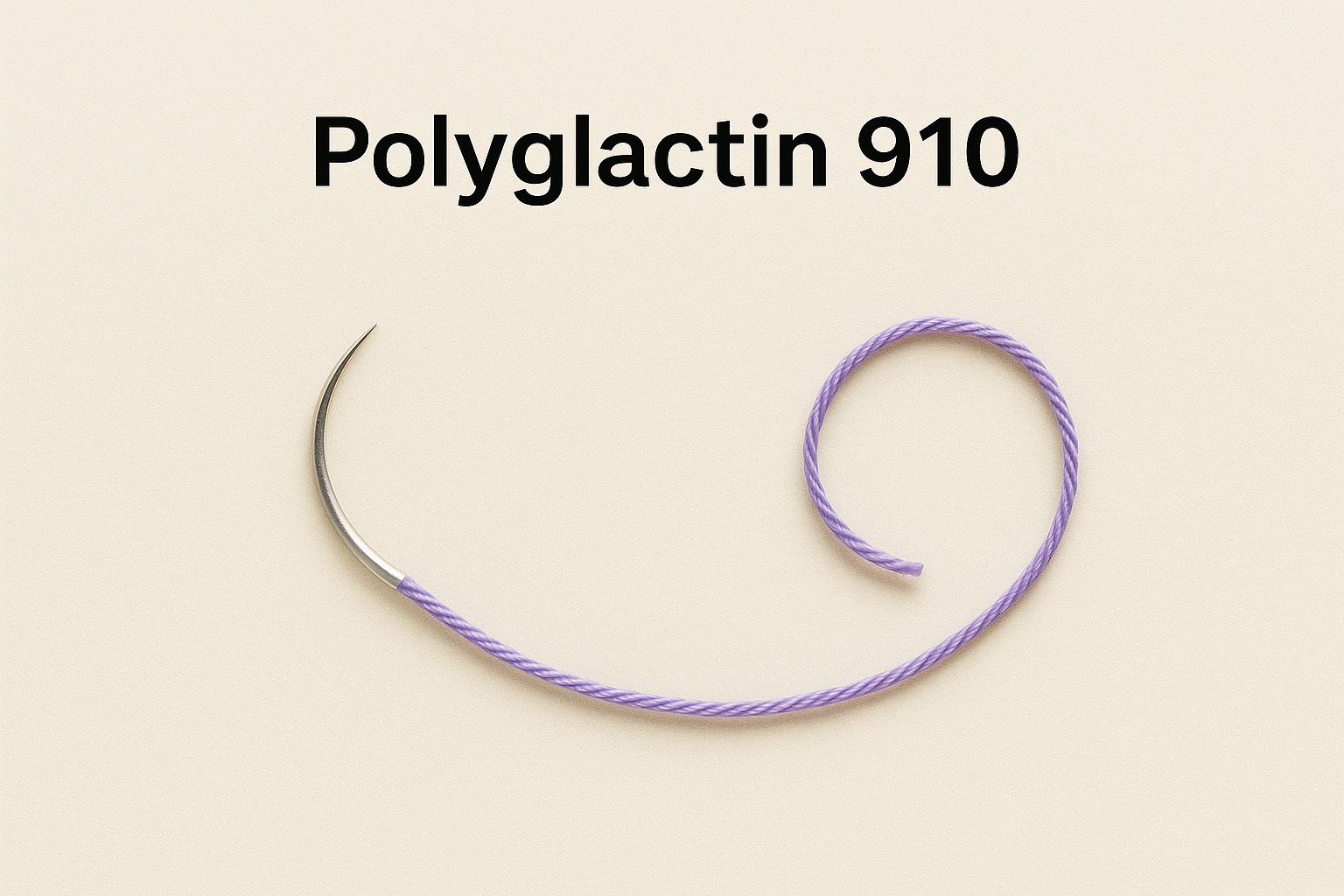
Polyglactin 910 (Absorbable)
A special kind of thread that doctors use to close cuts or help the skin heal after surgery. It is made from a safe material that eventually melts in the body.
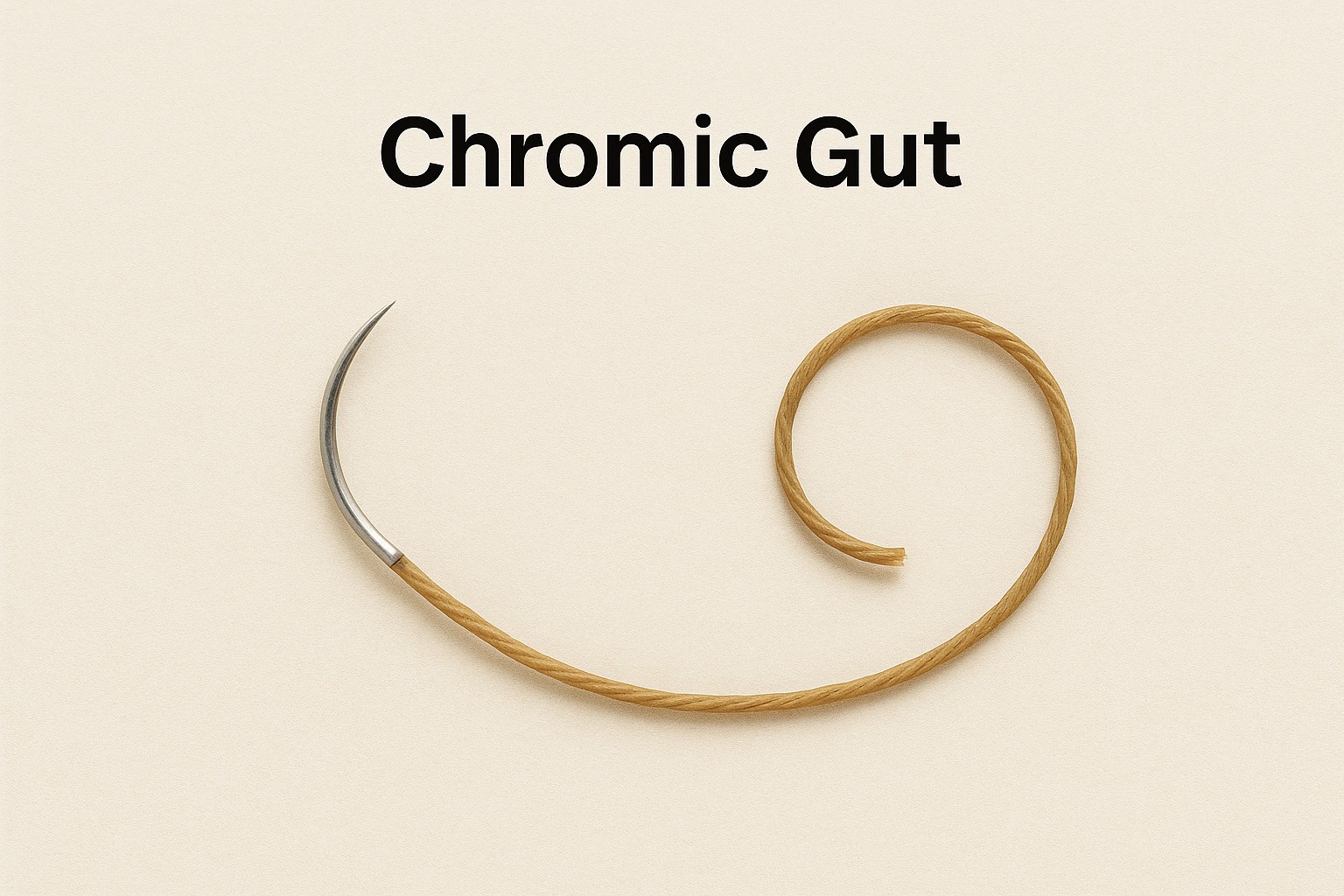
Chromic Gut (Absorbable)
A special kind of natural thread doctors use to close up cuts or wounds. It disappears inside the body as you heal and usually leaves about 10 to 21 days.
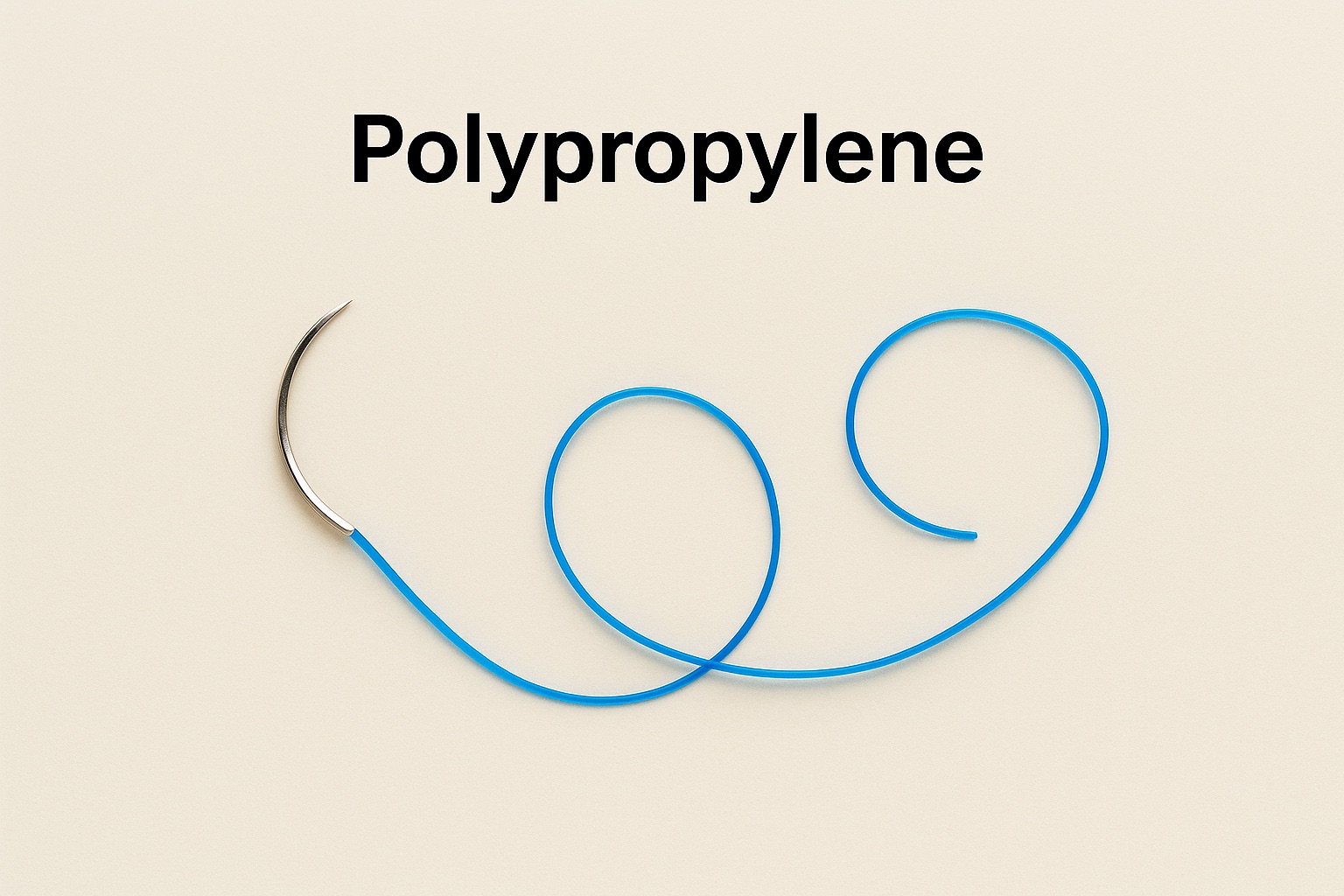
Polypropylene (Non- Absorbable)
A smooth, shiny blue thread that doctors use for skin and heart or blood vessel surgeries that’s very important for proper healing. Depending on the type of injury, this thread may be removed or left in the body to help with recovery.
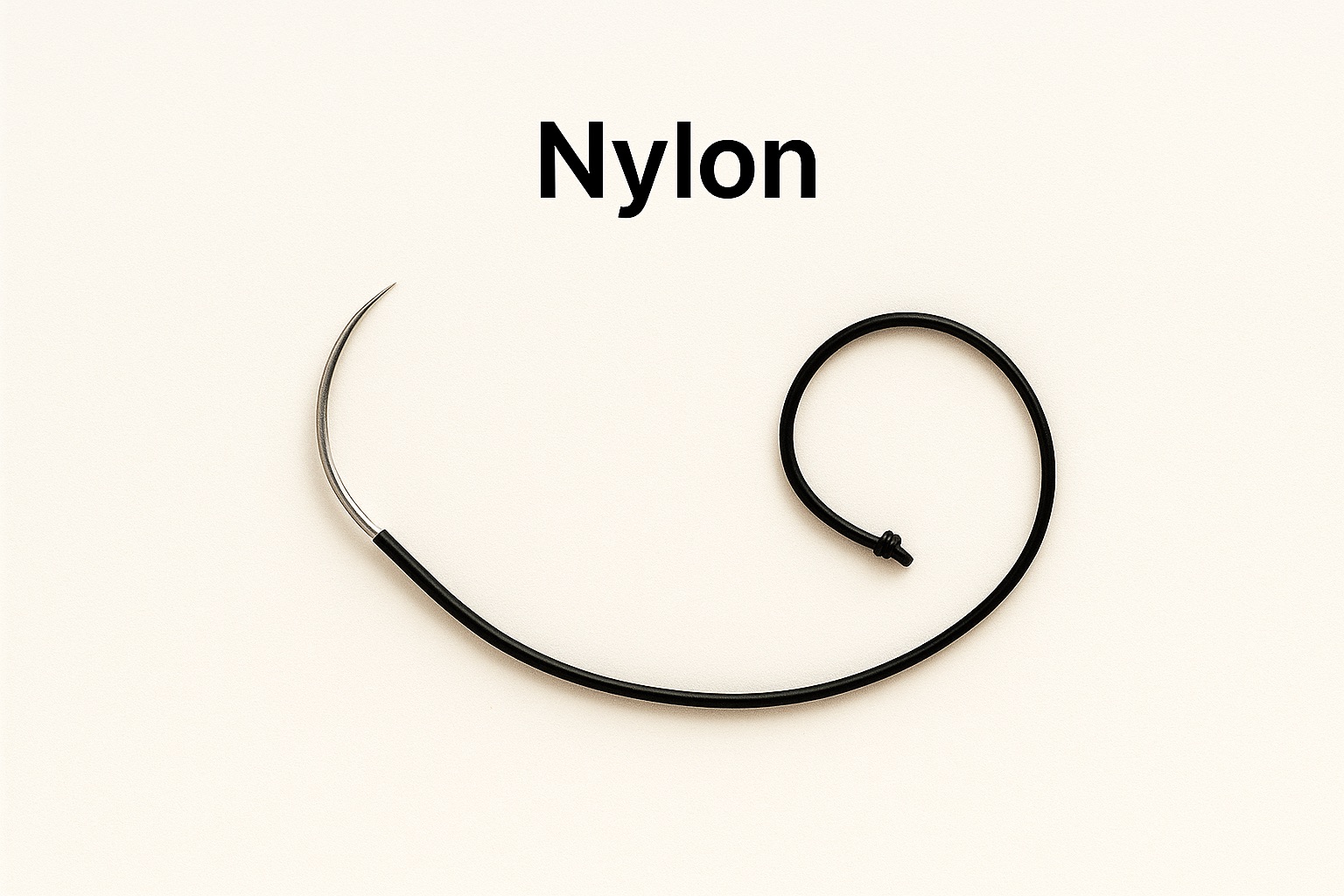
Nylon (Non- Absoerbable)
A super strong thread doctors use to close skin cuts. It doesn’t melt away, so you’ll need to go back to the doctor after it heals in about 7 to 14 days.
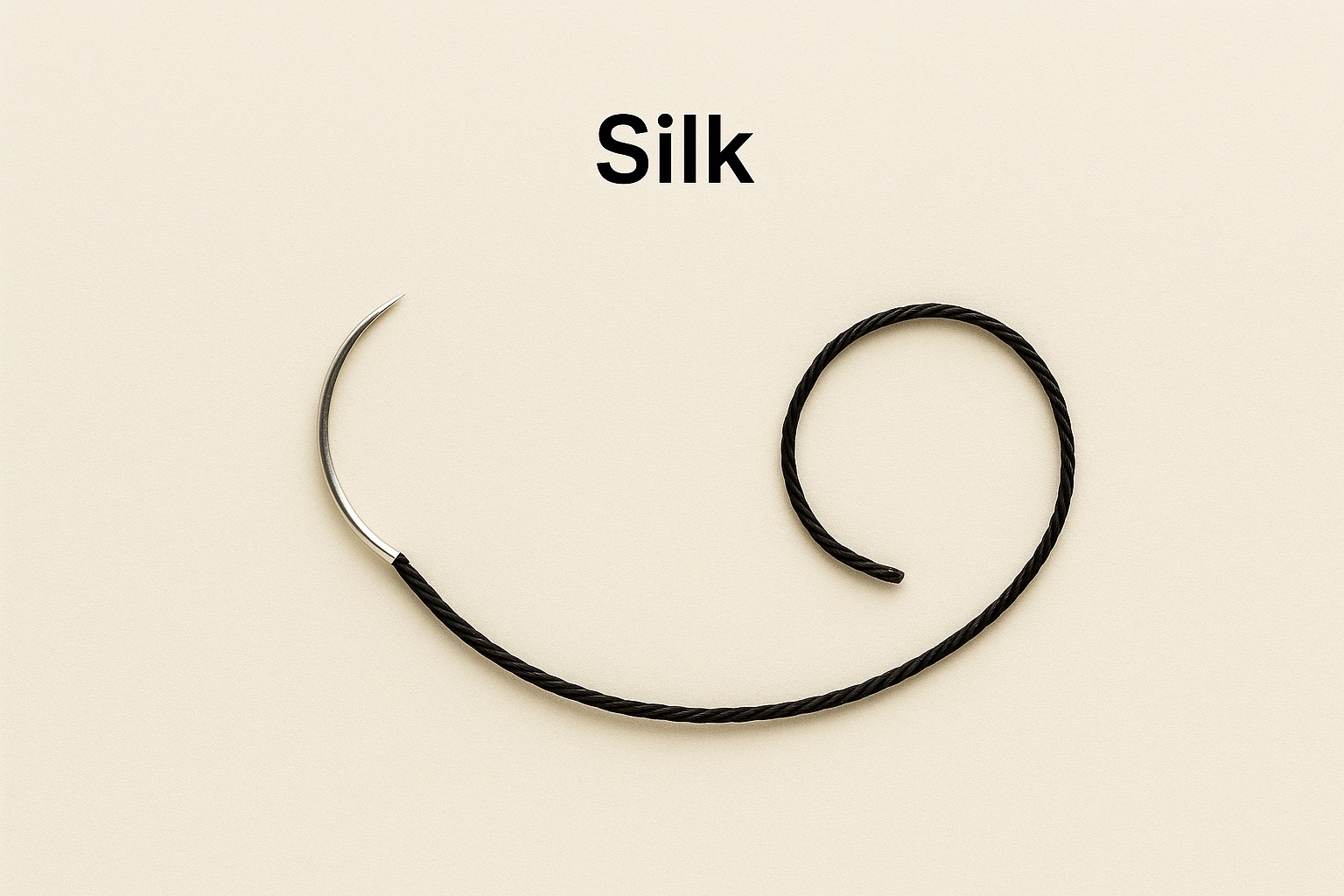
Silk (Non- Absorbable)
A soft black thread made from natural silk fibers that is easy to tie and gentle on the skin. It is usually removed in 7 to 10 days.